Somehow I like this pesto better. Coriander seems to be less in your face than basil, and if you leave the pistachios coarse enough, there’s a great texture that pine nuts can not provide. Enviably green: a bunch of coriander leaves and young stems blended with two handfuls of pistachios and a clove of garlic and enough olive oil to get a beautiful shine. Not too runny and not too sluggish. Grate your Parmesan, maybe another handful or two, add some more pistachios, blend again but only briefly, adjust your salt and you’re good to go.

Have you ever yearned for freedom? Not the Count of Monte Cristo, I’m free and hell bound kind of freedom, nor the Nelson Mandela, Rebirth of Hope kind either. I’m talking about a freedom of a less significant kind. A silly, wasteful, icantreallybebothered one. You know, the kind where nothing stops you from sitting there looking at your toes for 3 days. Well, 5 weeks ago I handed in my resignation. This Monday was my first day as a free, unemployed man, and I have to tell you, so far, my toes look great!
Some time ago, I decided I need a short career break; a month or two where I don’t have to walk into an office. Not that I hated my job or the people who work there; I actually enjoyed both. I love .Net development as much as your next geek does, and I also consider at least half of my (old) team as good friends (love you guys). But I just needed a break, some time for myself. To do some travelling. To sleep in when I felt like it. To get my car serviced. To take my 5 month old daughter to her swimming lessons on a Wednesday – she’s about to start crawling by the way, God help us. Let’s face it, sometimes, you just need a change - I needed mine and now it’s here. Though not as redeeming as escaping Shawshank and not as poignant as William Wallace’s great moment, my freedom somehow feels just as important.
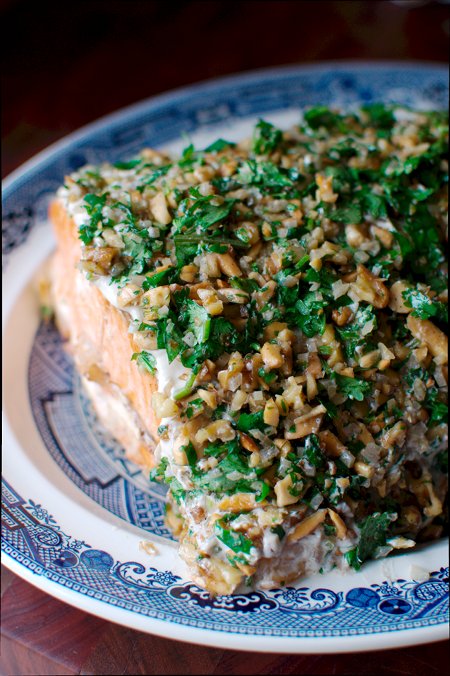
Yes, you’re right, I am worried about income. Somehow, I had never associated my work with the paycheck I got. Money seemed incidental to employment, appearing in my bank account as matter of monthly habit, though now I know better. But before the realities of a diminishing bank account start hitting hard, it’s time to celebrate. Samkeh harra, or chilli fish, is one of Lebanon’s celebratory dishes and one of only a handful of fish dishes to ever come out of Lebanon. Think rich, fatty fish (salmon in this case), roasted until just done, smothered with tahini and covered with one of the simplest and best flavour combinations to ever join forces – fresh coriander, roast walnuts and almonds, lemon juice, onions, chilli and olive oil. This is a dish worthy of its own celebration, but is also perfect as one to mark my achievement. On Sunday, I sat and ate with the sun on my shoulders and felt like a free man.
Do you need a career break, or have you taken one already? Share your story and your celebration dish by leaving a comment.

Salmon: 4 kilo salmon, skin scored, rubbed with salt, pepper and olive oil, covered with aluminium foil at 200c and baked until done (1 hour approx)
Tahini sauce: Mix tahini (1.5 cups), juice of 1 lemon, salt, a crushed garlic clove and add enough water until you have a thick homogenous sauce. Adjust flavours to taste
The herb and nut layer

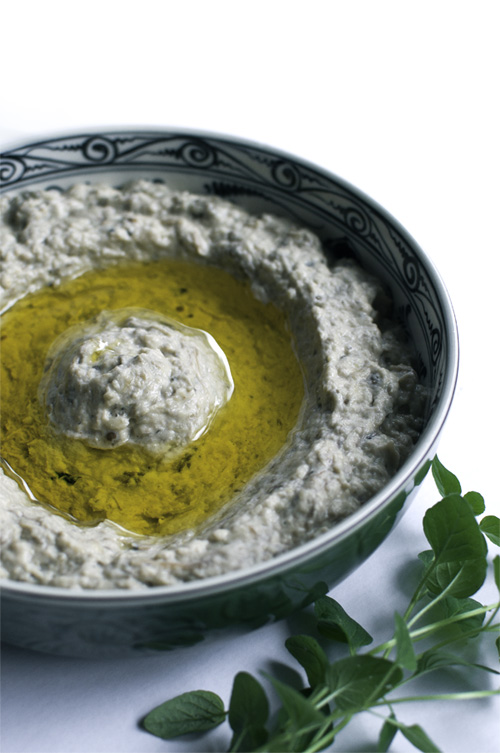
To reach the goal of baba ghanouj perfection
For the eggplant fruit you must have affection
This Lebanese dip is destined to be great
So don’t settle for something second rate
Start off with fruit that are heavy and shiny
While not too big and not too tiny
Pierce holes in the skin so as not to explode
While preparing them as we are told
These unnecessary explosions during preparation
Give good Middle Easterners a bad reputation
To cook them you’ll need a charcoal barbecue
For neither gas nor heat beads will do
If you wish to get that authentic flavour
Think charcoal an ingredient you should learn to savour
The eggplants must grill, their skins must burn
So that deep, rich smokiness they truly earn
When they give up their form, go limp and sag
Put them in a bowl covered with a plastic bag
They’ll continue to soften, the smokiness will infuse
Into the flesh until the heat would diffuse
Then take them out, peal and drain them well
Do not rinse with water as it will break the spell
Those small specks of black are a desirable thing
For the story of charcoal they will loudly sing
Once well drained and cool, you’re ready to proceed
Throw the eggplants into a bowl, cover with sesame seed
That has been pressed into tahini. It’s true Lebanese
Tahini is best, so only use that please
Two tablespoons per medium fruit you’ll require
And the juice of half a lemon to give some fire
But remember that lemon juice is only there
To compliment the creaminess of the tahini affair
The taste of lemon juice should not be intrusive
Its existence must remain elusive
Crush a bit of garlic with a teaspoon of salt
Before you use too much, you really must halt
In the same way the lemon’s used discretely
The garlic’s existence should almost completely
Be hidden, it’s there just to balance the fruit
A heavy hand and garlic turns into a brute
It’s really that simple, needing no herb nor spice
But here’s my most important piece of advice
Mix only with a fork and not a blender
For machines destroy the textural splendor
Season to taste, adjust as you wish
And there you have it, the perfect dish

Have you ever been to Silvas in Petersham? Man, that place serves up some mean Portuguese. It’s so my kind of place – loud, straight to the point, big flavours and seriously good food. I love almost everything they’ve got. From espetada, those vertical skewers studded with large hunks of beef partnered with squares of golden fried polenta, to barbecued Portuguese chicken, moist, garlicky, charred, hinting of chili. Then there’s this soft cuttlefish with a sauce of godknowswhat – I think it’s a reduction of soy and balsamic, but they won’t tell me. Oh and the sardines. Jesus. So simple, and so bloody good. There’s also pipis, one of those specials on the blackboard that never seem to disappear. A 5 year special I’d say. So good I can’t even explain. Though not as omnipresent at the tables of the large Portuguese families stuffing their faces with the awesomeness of charcoal grilled chicken, to me, it’s an equally convincing reason to hit the road and seek seafood salvation at Silvas.
Pipis are not commonly found on the menus of Sydney restaurants, are they? I hardly spot them, unless they’re smothered with X.O. sauce, in which case they also rock. I love these little molluscs. Gather them or buy them live. A kilo is a meal for two, or one. Steam them kindly or cook them gently with a half reduced cup of dry white wine like I did. Cover them until they open and then stop before they overcook. Make beurre blanc, but use garlic instead of shallots and stick with wine and lemon juice for acidity, forgoing the vinegar. Add roughly chopped parsley (to qualify the dish as rustic, of course). The cooking liqueur of the pipis is usually too gritty for me, so I discard that. Toss the cooked pipis in the beurre blanc and make sure you have plenty of bread to mop up the juices. Or just go to Silva’s and order the pipis special. I’d wager a bet it’s still there.
P.S. Merry Christmas! Hope this year has been kind to you, your family and friends. My thoughts and prayers go to my own good friend Steve Shaw. I hope the new year sees your recovery. We love you Stevo!

I hate the Chinese and how clever they are. Fried rice. Bastards. For centuries, Lebanese mothers have been force-feeding their children all the rice cooked for the meal in fear of it going stale. While the Lebanese grew fat with gavage, the Chinese ate reasonably sized meals, saving the rice for the day after. Stale rice is a necessary backbone of fried rice, and when done well, it is pure joy.
There it was, a bowl of stale, plainly cooked basmati, flavoured with Iranian saffron; sitting in the fridge, waiting to be eaten with a dollop of yoghurt – might sound good to you, but in reality, it’s more boring than you imagine. Rice doesn’t survive a nuclear reheating as well as one would hope. Take a lesson from the Chinese. A bit of onion and garlic, a can of chickpeas and some beef mince, caramalised in a wok. A Lebanese teaspoon or two of each cumin and cinnamon, and a touch of chilli – toss the rice in, coat it well. Shred some poached chicken breast and scatter on top with some fried almonds; a stir-fry worthy of an emperor. Rozz a’ djej (rice with chicken), this Chinese remake of the Lebanese classic is still best eaten with a fork.

Are you sick of my pistachio packed posts? I don’t blame you, but really, this is a follow up on my obsessive post on Bronte pistachio paste, so bear with me and you will learn the easiest way to make ice cream, ever.
Now that I had finally experienced what a jar of pistachio paste from Bronte tastes like (bloody amazing), I seriously needed to do something about the low supply situation. A visit to my Greenacre-based Lebanese green grocer Abu Salim provided a good kilo of roasted unsalted pistachios for $15.00. I wouldn’t call us a perfectionist race, but when it comes to roasting nuts, the Lebanese are masters – they get it so right. The nuts were wonderful; the roasting concentrated and amplified their flavour brilliantly.
After shelling for an evening, thumbs sore with pain from the odd stubborn pistachio that refused to open, I ended up with a good amount to try making my paste. I was aiming for a smooth paste, and I knew my food processor was not up to the task. A quick tweet and the incredibly generous Mr Franz Scheurer was quick to donate his time and his Thermomix (what would have cost me $2000 to buy).

I wanted to create a pistachio paste that I could use in desserts, one that could have a decent lifespan, so I decided not to follow the ingredients of my jar of Bronte pistachio paste and instead omitted the milk. The paste would last longer, and I could add milk when I needed.
To create a good paste, I blitzed the pistachios along with some glucose and created an emulsification with grape seed oil. You could use any neutral oil. I didn’t take measurements and went with feel and taste. I stopped when the pistachios tasted slightly sweet and the paste was smooth enough for me (a bit of coarse meal is fine). The consistency needs to be slightly runnier than peanut butter. I went home and mixed in some cream with a small sample to test out the flavour and the gates of heaven opened and I heard a sweet song, and a choir or angels called out to me. Seriously, it was that good.
It is worth mentioning that if you want to make pistachio paste for ice cream, you may as well add some water into the blender to make the paste smoother. That way, you wouldn’t need a Thermomix, because with that much liquid, your food processor should do the trick. If you do add water, make sure you omit it from the recipe below.

I was aiming for a custard based ice cream, but as luck would have it, Jules from The Stone Soup posted a churn-free, machine-free lemon ice cream recipe. It looked incredibly simple, and I decided to give it a go. The basic idea is that by increasing the amount of sugar, ice crystals do not form. Jules folds lemon juice and icing sugar into whipped cream and simply freezes the lot for 6 hours. I did the same, but substituted pistachio paste for the lemon juice, and added some water to dissolve the sugar. The result was a beautiful. pistachio green ice cream with the texture of semifreddo, light, airy and delicious. I urge you wholeheartedly to try making ice cream this way. It is so simple – 5 minutes and you’re done, and it tastes ridiculously good.
Ingredients
300 ml whipping cream
200 grams icing sugar
4 heaped tablespoons (or to taste) of pistachio paste, prepared as mentioned above
Method
Whip the cream until soft peaks form
Mix icing sugar and pistachio paste and 1/3 cup of water until smooth (omit water if already used in paste preparation)
Fold the pistachio and sugar into the cream until evenly distributed
Whip the cream again until it gets to soft peak stage once more
Freeze for 6 hours or overnight

silver beet stalks with tahini
I’m guilty of murder. Okay, not actual murder, more a culinary crime. You know what it’s like. You get an idea for a recipe and in your head it sounds brilliant. But when you execute your plan, the end result is so bloody awful that you feel you may get jail time for your misdeeds. Has this ever happened to you?
Well, it happens to me, and quite often. Last week, for example, I attempted a new approach to silver beet rolls. I had it all planned out. The stuffing would be burghul flavoured with lemon olive oil, raisins and pine nuts. The rolls would be piled and dolloped with thick ribbons of creamy labna. I imagined the velvety textures contrasting with the crisp bite of the roasted pine nuts. I imagined the balance of flavours, sweet, sour, earthy and the heady aroma of lemon and spice. I subsequently imagined myself at a ceremony where Lebanese president Michael Suleiman was granting me the Order of the Cedar for my contribution to and innovation in Lebanese cuisine. The crowd was cheering, and I was shaking the congratulatory hands of my numerous fans.
Unfortunately, the creation was a total disaster. No cheering crowd for me. I was devastated. I wanted to silver beet myself silly.
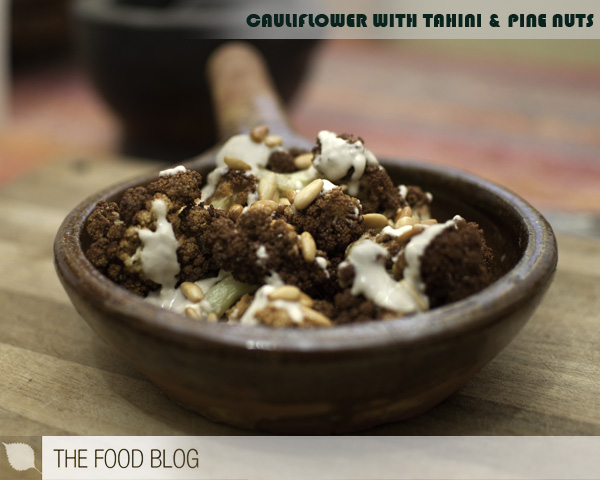
One consoling factor was that I was left with many silver beet stalks. To avoid further disasters, I resorted to the fool proof Lebanese classic, silver beet stalks in tahini. Tahini is the Lebanese culinary cure-all. If disaster befalls the Lebanese, we reach for tahini. Let me see; we’ve got chickpeas with tahini, eggplants with tahini, snails with tahini, fish with tahini, falafel with tahini, shawarma with tahini, molasses with tahini, kibbeh with tahini, eggs with tahini, cake with tahini. And of course, silver beet stalks with tahini.
This is a super easy dish and is a prime example of how necessity is truly the mother of invention. After making silver beet rolls stuffed with rice, the Lebanese cook is left with a large stack of silver beet stalks. Waste is avoided. The default setting of “smother the whole thing with tahini sauce” is applied. The end result is delicious.
So don’t underestimate this dish because of its simplicity. It really is wonderful, and its creator should have been bestowed the Order of the Cedar. To prepare, cut the cleaned stalks into squares, boil or steam them until just tender and mix into tahini sauce (tahini, lemon juice, crushed garlic, salt and some water for thinning). Sprinkle with roasted or fried pine nuts, drizzle a bit of olive oil and enjoy a disaster free dish.
Share your kitchen disasters. Leave a comment and tell me how horribly you have failed.

You’ve gotta love it when an idea comes together. It’s even better when it’s an idea so simple that it seems crazy that no one has already thought of it.
I once read the following formula:
Modern Art = I could have done that + Yeah, but you didn’t
I’m not saying I’m a modern culinary artist in any way, but there’s a pleasure I find in invention, and I sense joy when I manage to create something new, simple and delicious.
This is my version of kibbeh, and to be honest, it’s bloody awesome. Kibbeh is a family of dishes considered as Lebanon’s national culinary emblem where the common factor is that burghul, spices and onions are mixed with a binding agent. This binding agent could be anything but most commonly you’d see minced lamb or goat, pumpkin or lentils.
The two most famous incarnations of kibbeh are nayyeh and kbeb (or mikliyyeh). Nayyeh is the raw version, a silken beauty doused with olive oil and eaten with loads of fresh mint and raw onions. Kbeb are the torpedo shaped kibbeh, hollow but filled with fried mince, onions and pine nuts and then deep-fried. Imagine how good that tastes.
My kibbeh is derived from the latter, and it simply aims to bring out the best aspects of the kbeb: a crisp exterior, a generous filling of the sweetest, star anise caramelised onions and an abundance of fried pine nuts. It’s kibbeh on steroids, with all the flavours amplified ten-fold. This goes down on my list of top 10 favourites. You’ve got to try it!

follow: